Why Zürich became a hotspot for AI and robotics labs
1 November 2026 · 14 min read · Data as of 1 November 2026
On 1 November 2026, SwissAIJob listed 530 open AI and machine learning jobs across Switzerland. 374 of them were in Zürich. No other Swiss city comes close: Geneva had 45, Lausanne 37, Basel 29 and Bern 21.
This post looks at what our listings show, how the cluster was built, why labs keep coming, and where Zürich falls short.
In short
- On 1 November 2026, 374 of the 530 live AI and ML jobs on SwissAIJob were in Zürich (71%), ten times as many as in Lausanne (37) and eight times as many as in Geneva (45).
- The concentration is strongest at the research end: Zürich has 73% of research roles and 86% of the robotics, drone and autonomy postings in our data.
- Big tech and global AI labs post the largest block of Zürich jobs (134 at 19 employers, led by Google, NVIDIA, Apple, IBM Research and Huawei). Robotics and drone companies add 51 more at 14 firms.
- The cluster grew in layers: ETH Zürich (1855), IBM's research lab (1956), Google (2004), robotics labs and their spin-offs (2010s), then OpenAI, Anthropic, Microsoft AI and the RAI Institute (2024–2025).
- The main draw is talent. ETH graduates about 4,000 master's and doctoral students a year, and OpenAI opened its Zürich office in 2024 around three researchers who already lived in the city.
- The downsides are housing (0.11% of flats in the city stood empty in June 2026), permit quotas for hires from outside the EU/EFTA, and a small venture market.
How big Zürich is in Swiss AI hiring
Zürich's 374 listings are 71% of the Swiss total. 343 of them are in Zürich only; the other 31 also name another city, such as Geneva, Bern, Basel or Davos. The rest of the canton (Schlieren, Wallisellen, Dübendorf, Winterthur and other towns) adds 11 more, for 385 or 73%. You can browse them on our Zürich jobs page.
The runner-up cities look different up close. Geneva's 45 jobs are mostly private banking and consulting (Lombard Odier alone has 15). Lausanne's 37 are led by EPFL with 12, followed by AI start-ups such as Giotto AI and Harmattan AI (6 each). Zürich's 374 come from 90 different employers, two thirds of the 134 employers with live AI jobs anywhere in Switzerland.
Zürich's listings are also more senior. 54% of them are senior, lead or principal roles, compared with 36% in the rest of the country. One caveat for the university cities: many PhD and postdoc openings are posted only on individual lab pages, which we don't all track, so academic jobs are undercounted everywhere.
Research labs
76 of Zürich's live jobs are research roles: research scientists, research engineers and research interns at research institutes and corporate labs. That is 73% of all research roles we list in Switzerland. They come from 25 employers. The biggest are Huawei's Zürich research centre (13), IBM Research in Rüschlikon (12), Apple (10), Meta (6), Google (4) and the Robotics and AI Institute (4). Google DeepMind, NVIDIA, OpenAI, Anthropic, Mistral AI, Disney Research and smaller labs such as Mindfire and Tufa Labs each have one to three. ETH Zürich and the University of Zürich add 21 academic positions (PhD, postdoc and staff roles), which we count separately. All of them are on the Zürich research jobs page.
Robotics
Robotics is where Zürich stands out most. We count a posting as robotics when its title or keywords name robots, drones, autonomy, manipulation, SLAM or robot learning, or when the employer builds robots or drones. By that measure, 84 live jobs are in robotics and 72 of them are in Zürich (86%), at 20 employers. The largest are Mimic Robotics (8), Enact Intelligence (7), Skydio (7), Flexion Robotics (6), Hexagon Robotics (5), the RAI Institute (4), ANYbotics (4) and ETH's own robotics labs (7 between them). NVIDIA, Amazon and Meta also post robotics research roles in Zürich. Outside Zürich we found only 12, six of them at one company in Lausanne. One in five Zürich AI jobs is in robotics, against one in thirteen elsewhere. Robot learning roles often go by reinforcement learning or computer vision.
Who is hiring
Big tech and global AI labs post 134 of Zürich's 374 jobs. Google (20), NVIDIA (18), Apple (16), IBM Research (14), Huawei (14), Nebius (10) and Amazon (8) lead. Consulting and IT firms come second with 82, then 60 jobs at 25 smaller AI companies, several of them founded by ETH researchers or graduates. In all, 45 of the 90 employers hiring in Zürich are companies whose core business is AI (we tag them AI-native). The stats page has the live version of these counts.
A steady share since spring
Our coverage started in April 2026 and grew from about 80 employers to more than 200, so monthly counts mostly reflect what we track rather than market growth. The share is more telling. From May to October, 1,051 of 1,549 new postings (68%) were in Zürich, never less than 57% in a month. For robotics the share was 83% (128 of 155). Five months of data can't show a long-term trend, but they show the concentration isn't a one-day snapshot.
How the cluster was built
A university first
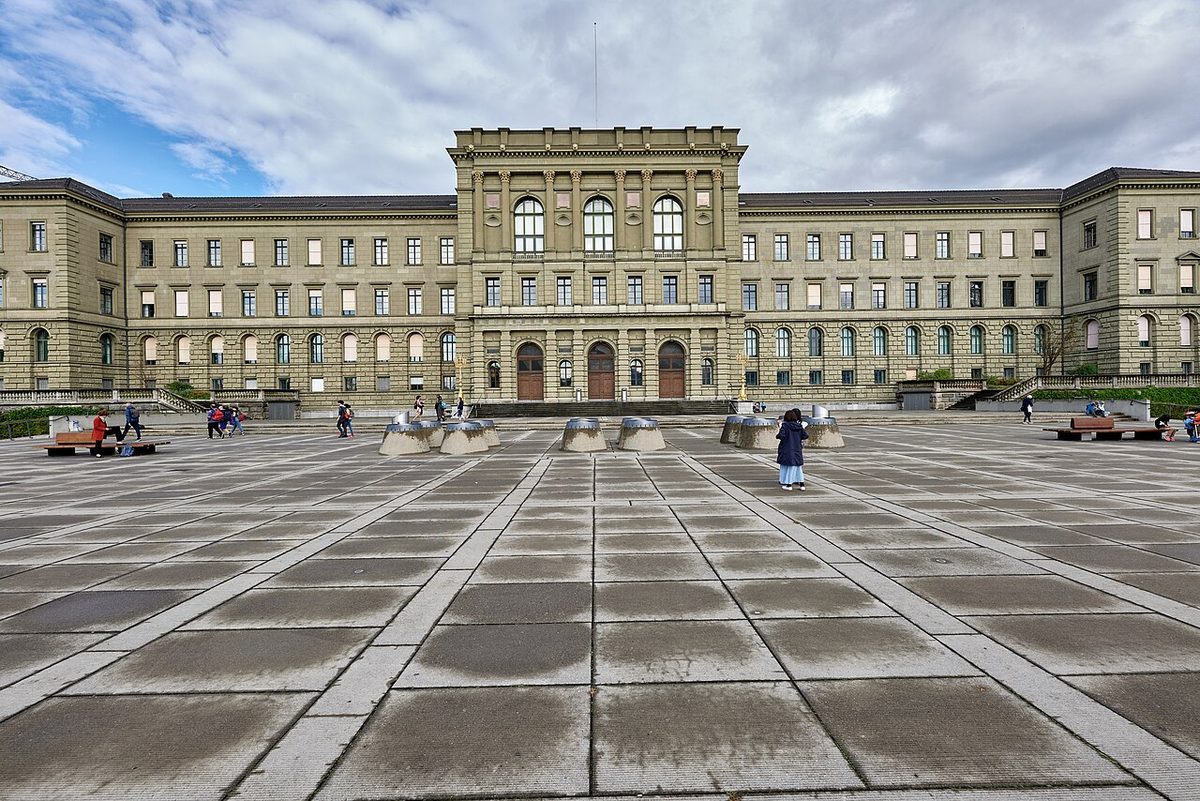
ETH Zürich opened in 1855 as the federal "Polytechnikum" (ETH Zürich). It is 8th in the latest QS World University Rankings (June 2026), its 12th consecutive year in the top ten (S-GE, 2026), and 12th in the Times Higher Education ranking for 2027, still first in continental Europe (SRF, 2026). ETH says about 4,000 master's and doctoral students graduate each year and that more than two thirds of its foreign graduates stay in Switzerland to start their careers (ETH Zürich, 2026).
IBM, the first corporate lab
IBM set up its first European research lab near Zürich in 1956 (IBM Research) and has been in Rüschlikon since 1962 (swissinfo, 2006). Two physics Nobel prizes followed: in 1986 Gerd Binnig and Heinrich Rohrer shared half the prize for the scanning tunnelling microscope, and in 1987 Georg Bednorz and Alex Müller won for superconductivity in ceramic materials. All four were at the IBM Zurich Research Laboratory when the prizes were awarded (Nobel Prize, 1986; Nobel Prize, 1987). The lab turned 70 this year and still posts AI research roles; it has 14 live jobs on our board.
Google, and the people it brought
Google announced an engineering office in Zürich in 2004. Its own explanation was about people: Zürich "draws Italians, French, Swiss, Germans, and other Europeans" and is easy to reach from most of the continent, and "talented engineers live in every time zone, not just Silicon Valley" (Google, 2004). The move was initiated by Urs Hölzle, Google's vice-president of engineering and an ETH graduate. By 2008 the office had more than 400 staff and was Google's biggest engineering hub outside the US (swissinfo, 2008). In 2016 Google set up a dedicated machine learning research group in Zürich (Fortune, 2016). By its 20th anniversary in 2024 Google had about 5,000 people in Switzerland, after cutting about 500 jobs the year before (SRF, 2024).
A large lab also trains future founders, and future hires for its rivals. DeepJudge, a legal AI company with five live jobs on our board, was founded by former Google researchers with AI PhDs from ETH (DeepJudge).
Robotics labs and their spin-offs
Zürich's robotics strength comes from university labs that turned research into companies. Raffaello D'Andrea, who co-founded Kiva Systems (later Amazon Robotics), joined ETH in 2008 and co-founded the warehouse drone company Verity in 2014 (ICRA, 2025). The University of Zürich's Robotics and Perception Group, led by Davide Scaramuzza, was founded in February 2012 (UZH RPG); three of its former members co-founded Zurich Eye in 2015, which became Oculus VR Zurich, part of Facebook, in 2016 (UZH, 2016).
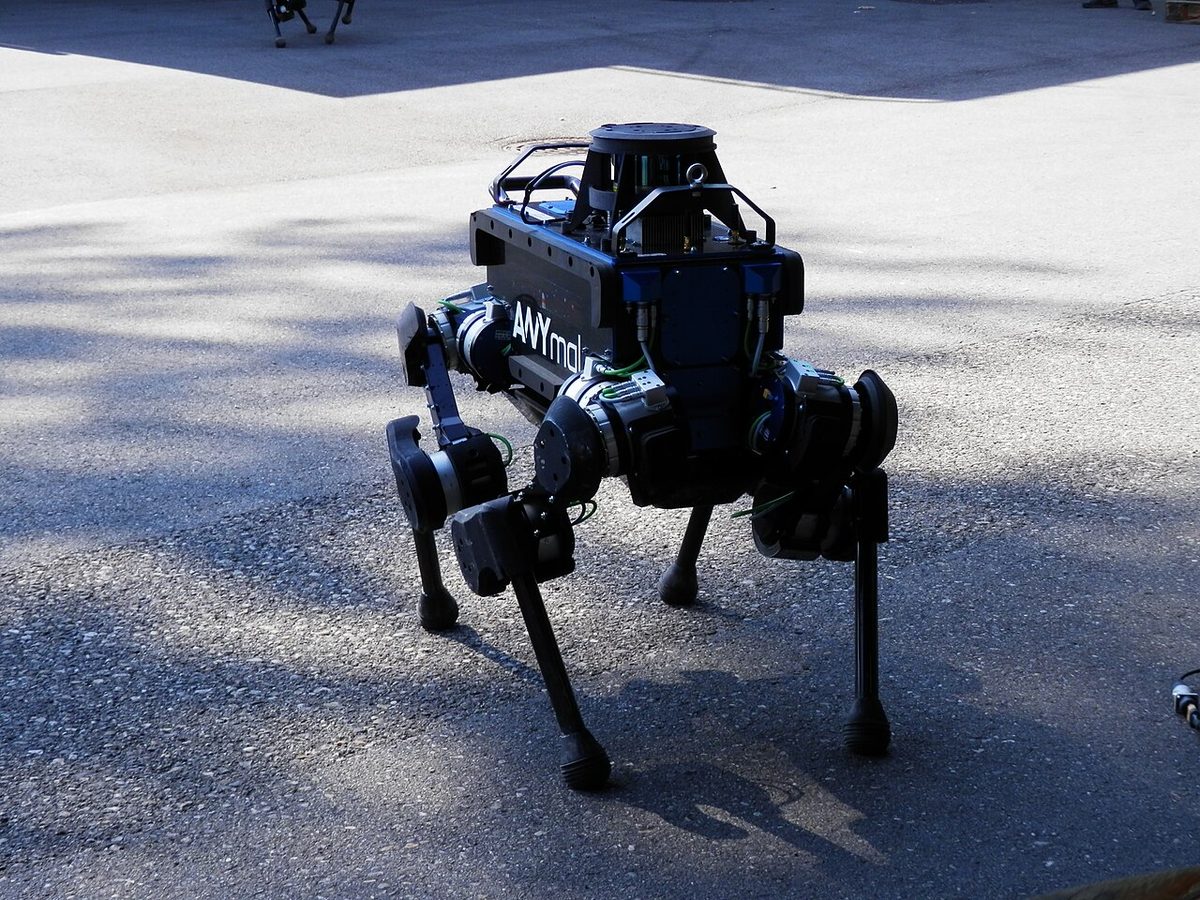
ANYbotics, maker of the four-legged ANYmal, spun off from ETH in 2016 (Greater Zurich Area, 2020). Sevensense, founded as an ETH spin-off in 2018, was bought by ABB in January 2024 (Walder Wyss, 2024). The survey drone maker Wingtra started as a project at ETH's Autonomous Systems Lab (Wingtra). The drone software company Auterion raised CHF 103 million in 2025, the largest round of any ETH venture that year (ETH Zürich, 2026). Scandit, founded in 2009 by researchers from MIT, ETH Zürich and IBM Research, is a Zürich example outside robotics (Scandit).
Public programmes supported this. The NCCR Robotics ran from 2010 to 2022, led from EPFL with ETH Zürich as a second home institution from 2014, on CHF 39.8 million from the Swiss National Science Foundation (SNSF). Wyss Zurich, set up by UZH and ETH with a USD 120 million gift from Hansjörg Wyss, opened in December 2015 to take robotics and regenerative medicine from the lab towards products (UZH, 2015).
The AI lab wave, 2019–2026
The next layer came from large companies opening AI research teams. Disney had already set up Disney Research Zürich with ETH in 2008, its first research lab outside the US (swissinfo, 2008). Microsoft launched its Mixed Reality & AI Zurich Lab with ETH professor Marc Pollefeys in October 2019 (Microsoft, 2019). Huawei has run a research centre in Zürich since 2018 and says it employs more than 100 researchers (Huawei). Sony AI, announced in 2019 with offices in Japan, Europe and the US, has a Zürich office in Schlieren, next to the city (Sony, 2019; Sony AI). ETH founded its AI Center in 2020 (ETH AI Center).
Then the frontier labs arrived. In 2024 the Financial Times reported that Apple had hired AI researchers from Google for a lab in Zürich (Wired, 2024). In December 2024 OpenAI hired three Google DeepMind researchers, Lucas Beyer, Alexander Kolesnikov and Xiaohua Zhai, to open a Zürich office; all three already lived in Zürich (same source). In June 2025 Meta hired the same three away from OpenAI's Zürich office (Reuters via The Star, 2025). Anthropic named Neil Houlsby, another Google DeepMind researcher, to lead its new Zürich office in February 2025, its third in Europe after London and Dublin (Greater Zurich Area, 2025). The same month Microsoft AI started a Zürich lab with three former Google researchers (Netzwoche, 2025). Mistral AI announced plans for teams in Zürich and Lausanne in December 2025 (Netzwoche, 2025), and Jeff Bezos' Project Prometheus started hiring in Zürich in February 2026 (swissinfo, 2026).
Robotics followed the same pattern. The Robotics and AI Institute (RAI), a US research institute based in Cambridge, Massachusetts, recruited ETH robotics professor Marco Hutter to lead a Zürich office in December 2023 (RAI Institute, 2023) and opened its Zürich centre, its second after Boston, in September 2025. ETH's annual report puts it plainly: Hutter brought the institute to Switzerland because "Zurich with ETH is a top location, similar to Boston with MIT" (ETH Zürich, 2026).
The public side kept pace. ETH and EPFL started the Swiss AI Initiative in December 2023 with more than 10 million GPU hours (EPFL AI Center). The Alps supercomputer at CSCS in Lugano, with 10,752 NVIDIA Grace Hopper superchips, was inaugurated in September 2024 (ETH Zürich, 2024). On it, EPFL, ETH and CSCS trained Apertus, a fully open language model in 8 and 70 billion parameter sizes, released in September 2025 after training on 15 trillion tokens in more than 1,000 languages (EPFL AI Center, 2025).
Why labs choose Zürich
Talent sits close together
Economists have long argued that innovation clusters because knowledge travels badly. Michael Porter described clusters as a source of advantage built on "local things", knowledge and relationships that distant rivals cannot match (Porter, 1998). Jaffe, Trajtenberg and Henderson found that patents are cited more often by inventors in the same metropolitan area than the existing spread of research would predict (Jaffe et al., 1993). Moretti followed almost 110,000 US inventors and found that they produce more and better patents after moving to a city with a large cluster of inventors in their field (Moretti, 2021).
A finding from biotech fits Zürich well: new firms tend to appear where star scientists already are. Zucker, Darby and Brewer showed that the timing and location of new US biotech firms were explained mainly by the local number of highly productive "star" scientists (Zucker et al., 1998). The 2024–2025 openings look like that. OpenAI built its Zürich office around three researchers who already lived in the city, and Anthropic and Microsoft AI started theirs by hiring from Google DeepMind. The anchor is ETH: once people are trained in Zürich and stay, labs come to them.
Spin-offs stay
ETH counts 530 spin-offs founded since 1973 that are still active, 519 of them in Switzerland, and 93% of its spin-offs are still operating five years after founding (ETH Zürich, 2025). In 2025 it recognised 46 new ventures, with technology and software, including AI, the largest sector at 26%, and companies created at ETH raised CHF 540 million (ETH Zürich, 2026). Saxenian's comparison of Silicon Valley and Boston's Route 128 argued that Silicon Valley's decentralised but cooperative system of firms did better than a region dominated by self-sufficient corporations (Saxenian, 1994). Zürich, with its university labs, spin-offs and big-company teams, and researchers moving between them, looks more like the first.
Innovation, money and compute
Switzerland ranked first in WIPO's Global Innovation Index for the 16th consecutive year in 2026 (WIPO, 2026). Shared public compute matters for AI in particular: the Swiss AI Initiative used Alps to train a national open model. Zürich also ranks high for quality of life: fifth in the EIU's Global Liveability Index 2026 (Time Out, 2026). Salaries are high too; our post on AI salaries in Switzerland has the figures by role and city.
Where Zürich falls short
Cost of living and housing. In the EIU's 2023 cost of living survey, Zürich and Singapore tied as the world's most expensive cities (EIU, 2023). Finding a flat is the harder part: on 1 June 2026, 0.11% of homes in the city of Zürich stood empty, and 0.52% in the canton (Kanton Zürich, 2026).
Permits. Hires from outside the EU/EFTA fall under a national quota. For 2026 the Federal Council kept it at 8,500 permits (4,500 B and 4,000 L permits) for all of Switzerland (FDJP, 2025). Our post on AI jobs in Switzerland for foreigners covers what that means in practice.
Taxes. Zürich is one of the most expensive Swiss cantons for companies. KPMG's 2025 Swiss Tax Report puts its corporate profit tax rate at 19.61%, against 11.85% in neighbouring Zug; only Bern is higher (finews, 2025).
A small venture market. Swiss start-ups raised CHF 2.9 billion across 354 rounds in 2025, with Zürich the leading canton (SECA and startupticker.ch, 2026). For comparison, Paris-based Mistral AI raised €1.7 billion in a single round in September 2025 (Mistral AI, 2025).
Competition for the same people. The labs that came to Zürich compete for the same small pool of senior researchers, and for most of them Zürich is one office among several: Anthropic and OpenAI both opened in London first. OpenAI's founding Zürich team left for Meta within about seven months, and Google cut about 500 Swiss jobs in 2023. Kerr and Robert-Nicoud's review of tech clusters also discusses the strains and backlash that successful clusters face (Kerr and Robert-Nicoud, 2020).
What it means for job seekers
For AI research and robotics roles in Switzerland, most openings are in Zürich: start with AI jobs in Zürich and research jobs in Zürich. Lausanne is the second academic hub, around EPFL, and Geneva's AI jobs lean towards finance. PhD and postdoc positions are on /jobs/phd, and CV Match ranks every live job against your CV. A free weekly job alert sends new listings each Monday, and the events page lists meetups and hackathons where Zürich's labs recruit.
About the data
Our figures come from a snapshot of the SwissAIJob database taken on 1 November 2026 at 10:35 UTC. "Live" means the 530 listings online that day, at 134 employers (lab-level listings, such as ETH's Robotic Systems Lab, count under their university). Cities follow our city pages: "Zürich" is the city itself, and a job listed in several cities counts in each. Research roles are our Research role category (research institutes and corporate R&D); university jobs are a separate Academia category. Robotics postings are those whose title or keywords mention robots, humanoids, legged robots, drones, autonomy, manipulation, SLAM or robot learning, plus all postings from employers that build robots or drones; reinforcement learning roles for language models don't count. Employer types are our own grouping. Monthly figures count postings by the date we first saw them, only for listings that went live (1,886 of 1,968 rows since April 2026). They describe the roughly 200 employers we tracked by October 2026, not the whole Swiss market.
Frequently asked questions
Which AI labs are in Zürich?
On 1 November 2026, our board listed Zürich jobs at IBM Research, Google and Google DeepMind, Apple, Meta, Huawei, NVIDIA, Microsoft, OpenAI, Anthropic, Mistral AI, Disney Research and the Robotics and AI Institute, plus smaller labs such as Mindfire and Tufa Labs. ETH Zürich and the University of Zürich add academic labs, including the ETH AI Center and robotics groups such as the UZH Robotics and Perception Group. Sony AI has an office in Schlieren, next to the city.
Why did Google choose Zürich?
When Google opened its Zürich engineering office in 2004, it said Zürich attracts engineers from across Europe and is easy to reach from most of the continent, so Europeans could work for Google without moving to California. The move was initiated by Urs Hölzle, then Google's vice-president of engineering and an ETH graduate. The office became Google's biggest engineering hub outside the US by 2008, and Google had about 5,000 people in Switzerland by 2024.
Is Zürich or Lausanne better for AI jobs?
By volume, Zürich: on 1 November 2026 it had 374 live AI and ML jobs on SwissAIJob against 37 in Lausanne, and 72 of the 84 robotics postings. Lausanne's strength is EPFL and academic research, and academic openings posted only on lab pages are undercounted in our data. For industry roles at big tech, AI labs and robotics companies, Zürich has by far the larger market.
How many AI jobs are there in Zürich?
On 1 November 2026, SwissAIJob listed 374 live AI and machine learning jobs in the city of Zürich, 71% of the 530 in Switzerland, at 90 employers. Including the rest of the canton, the figure was 385. The live count changes daily on our Zürich page.
Why is Zürich strong in robotics?
ETH and the University of Zürich have run leading robotics labs for more than a decade, and those labs produced companies such as ANYbotics, Verity, Sevensense and Wingtra. Research institutes and corporate labs followed, including the Robotics and AI Institute, which opened its Zürich centre in 2025. In our data, 86% of Swiss robotics, drone and autonomy postings are in Zürich.
References
Research
- Jaffe, A. B., Trajtenberg, M., & Henderson, R. (1993). Geographic localization of knowledge spillovers as evidenced by patent citations. The Quarterly Journal of Economics, 108(3), 577–598. https://doi.org/10.2307/2118401
- Kerr, W. R., & Robert-Nicoud, F. (2020). Tech clusters. Journal of Economic Perspectives, 34(3), 50–76. https://doi.org/10.1257/jep.34.3.50
- Moretti, E. (2021). The effect of high-tech clusters on the productivity of top inventors. American Economic Review, 111(10), 3328–3375. https://doi.org/10.1257/aer.20191277
- Porter, M. E. (1998, November–December). Clusters and the new economics of competition. Harvard Business Review.
- Saxenian, A. (1994). Regional advantage: Culture and competition in Silicon Valley and Route 128. Harvard University Press.
- Zucker, L. G., Darby, M. R., & Brewer, M. B. (1998). Intellectual human capital and the birth of U.S. biotechnology enterprises. American Economic Review, 88(1), 290–306. NBER working paper version.
Official sources, reports and press
- DeepJudge. (n.d.). About. Retrieved 1 November 2026.
- Economist Intelligence Unit. (2023). Worldwide cost of living 2023 [Summary report].
- EPFL AI Center. (n.d.). Swiss AI Initiative. Retrieved 1 November 2026.
- EPFL AI Center. (2025, September 2). Apertus: A fully open, transparent, multilingual language model.
- ETH AI Center. (n.d.). About us. Retrieved 1 November 2026.
- ETH Zürich. (n.d.). History of ETH Zurich: Leading the way since 1855.
- ETH Zürich. (2024, September 14). New research infrastructure: 'Alps' supercomputer inaugurated [Press release].
- ETH Zürich. (2025, January 30). Start-up boom thriving [Press release].
- ETH Zürich. (2026). Annual report 2025: ETH Zurich at a glance.
- ETH Zürich. (2026, February 25). More companies founded, new regulations, new accelerator [Press release].
- Federal Department of Justice and Police. (2025, November 19). Federal Council leaves third-country quotas for 2026 unchanged [Press release].
- finews.ch. (2025, May 20). Zürich bleibt sich treu – als Hochsteuerkanton.
- Fortune. (2016, June 16). Google has a new machine learning research group in Switzerland.
- Google. (2004, May 10). Going out of our way to find the right people. Official Google Blog.
- Greater Zurich Area. (2020, December 4). Four-legged robot convinces investors.
- Greater Zurich Area. (2025, February 13). Anthropic appoints leading AI researcher Neil Houlsby to lead their Zurich office.
- Huawei Switzerland. (n.d.). Huawei in Switzerland. Retrieved 1 November 2026.
- IBM Research. (n.d.). Zurich lab. Retrieved 1 November 2026.
- ICRA 2025. (2025). Raffaello D'Andrea: Biography [Speaker biography].
- Kanton Zürich. (2026, August 18). Leerwohnungsziffer bleibt tief [Press release].
- Microsoft Switzerland. (2019, October 3). Mixed Reality & AI Zurich Lab: A lab is born.
- Mistral AI. (2025, September 9). Mistral AI raises 1.7B€ to accelerate technological progress with AI.
- Netzwoche. (2025, February 6). Microsoft eröffnet KI-Labor in Zürich.
- Netzwoche. (2025, December 10). Mistral AI expandiert in die Schweiz.
- Nobel Prize Outreach. (n.d.). Gerd Binnig: Facts (Nobel Prize in Physics 1986).
- Nobel Prize Outreach. (n.d.). J. Georg Bednorz: Facts (Nobel Prize in Physics 1987).
- RAI Institute. (2023, December 6). The Institute recruits Dr. Marco Hutter to lead its Zurich office [Press release].
- Reuters. (2025, June 26). Meta hires three OpenAI researchers, WSJ reports. Via The Star.
- S-GE (Switzerland Global Enterprise). (2026, June 18). ETH holds its position in the top 10.
- Scandit. (n.d.). About Scandit. Retrieved 1 November 2026.
- SECA & startupticker.ch. (2026, February 3). Significantly more money for Swiss start-ups [Swiss Venture Capital Report press release].
- Sony. (2019, November 19). Sony announces the establishment of Sony AI [Press release].
- Sony AI. (n.d.). Labs and offices. Retrieved 1 November 2026.
- SNSF (Swiss National Science Foundation). (n.d.). NCCR Robotics (2010–2022).
- SRF. (2024, November 25). 20 Jahre Google Schweiz: Erfolgsgeschichte mit ungewisser Zukunft.
- SRF. (2026, September 30). ETH Zürich verliert einen Rang im Hochschul-Ranking.
- swissinfo.ch. (2006, January 3). IBM laboratory glimpses the future.
- swissinfo.ch. (2008, August 12). Mickey Mouse seeks inspiration in Zurich.
- swissinfo.ch. (2008, October 20). "Zoogler" revolution gains momentum.
- swissinfo.ch. (2026, February 20). Bezos AI firm 'Project Prometheus' opening Zurich office.
- Time Out. (2026). The world's most liveable cities in 2026, ranked.
- University of Zürich. (2015, December 10). Bridge to practice: Wyss Translational Center Zurich.
- University of Zürich, Robotics and Perception Group. (n.d.). Robotics and Perception Group. Retrieved 1 November 2026.
- University of Zürich, Robotics and Perception Group. (2016, September 14). Zurich-Eye now part of Facebook-Oculus VR Zurich.
- Walder Wyss. (2024, January 12). ABB acquires Sevensense Robotics.
- Wingtra. (n.d.). About Wingtra. Retrieved 1 November 2026.
- Wired. (2024, December 3). OpenAI poaches 3 top engineers from DeepMind.
- WIPO. (2026). Global Innovation Index 2026: Which are the most innovative economies in 2026?.
Photos
- ETH Zürich main building: Leonhard Lenz, Hauptgebäude der ETH Zürich and Polyterrasse 2022-09-24 01, Wikimedia Commons, CC0 1.0. Resized.
- ANYmal: Auledas, ANYmal ARCHE 2019 1, Wikimedia Commons, CC BY-SA 4.0. Resized and recompressed.